
वीरता और विवेक
Valour and Wisdom
The Indian Military Academy (IMA) is an officer training academy of the Indian Army located in Dehradun , Uttarakhand. It was established in 1932 following a recommendation by a military committee set up under the chairmanship of Field Marshal Philip Chetwode. From a class of 40 male cadets in 1932, IMA now has a sanctioned capacity of 1,650. Cadets undergo a training course varying between 3 and 16 months depending on entry criteria. On completion of the course at IMA cadets are permanently commissioned into the army as Lieutenants.
The Academy, spread over 1,400 acres (5.7 km2), houses the Chetwode Hall, Khetarpal Auditorium, Somnath Stadium, Salaria Aquatic Centre, Hoshiar Singh Gymnasium and other facilities that facilitate the training of cadets. Cadets in IMA are organized into aregiment with four battalionsof four companies each. The Academy’s mission, to train future military leaders of the Indian Army, goes hand in hand with the character building enshrined in the IMA honour code, warrior code and motto. Cadets take part in a variety of sports, adventure activities, physical training, drills, weapons training and leadership development activities.
The Academy’s alumni include six recipients of India’s highest military decoration, the Param Vir Chakra, and India’s first Field Marshal Sam Manekshaw. Other achievements by alumni include 73 Military Crosses, 17 Ashoka Chakras, 84 Maha Vir Chakras and 41 Kirti Chakras. In 2017, Lieutenant Ummer Fayaz Parray was the 847th name to be engraved on the IMA War Memorial, which honours alumni of the Academy who have fallen in the course of action.
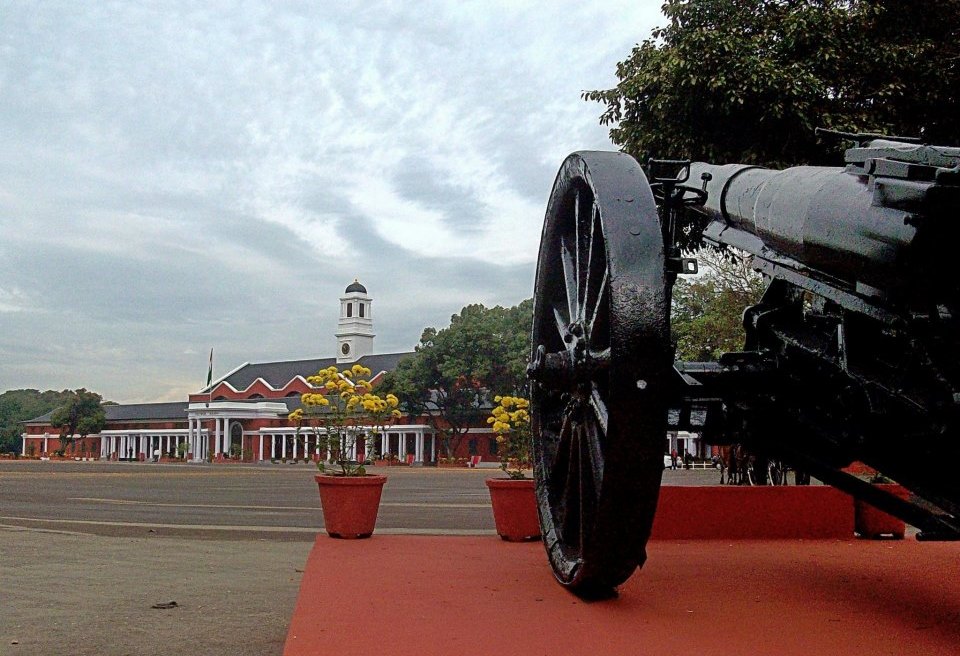
Campus
The Academy is located in the Doon Valley (Dronacharya Ashram), Uttarakhand. National Highway 72, the Dehradun–Chakrata Road, separates the North and South Campus. The campus of the Academy covers an area of 1,400 acres (5.7 km2). The Chetwode Hall on the drill square, built in 1930, houses the administrative headquarters of IMA and is also the hub of academic training. It has lecture halls, computer labs and a cafe. On the opposite side of the drill square is the Khetarpal Auditorium. Opened in 1982, it has a seating capacity of over 1,500. A newer wing of the Chetwode building, added in 1938, houses the central library. It has over 100,000 volumes and subscriptions to hundreds of periodicals from across the world, in addition to multimedia sections. In addition, there are two branch libraries closer to the cadet barracks across the campus.
The IMA museum on the campus displays artifacts of historic importance such as the pistol of Lieutenant General Amir Abdullah Khan Niazi of the Pakistan Army, given upon his surrender to Lt. Gen Jagjit Singh Aurora after signing the instrument of surrender to end the Bangladesh liberation war of 1971. A captured Pakistan Army Patton tank is also on the grounds.
Athletic facilities
The South Campus of IMA includes facilities such as the Somnath Stadium, with a seating capacity of 3,000, the Salaria Aquatic Centre, consisting of an Olympic sized swimming pool, and the Hoshiar Singh Gymnasium. The North Campus includes the polo ground along the Tons River. Tons Valley to the northwest of the campus is used for para-dropping, para-gliding, skydiving and battle training. Other facilities include stables with a stud farm, a small arms shooting range, and épée fencing from the modern pentathlon.
War Memorial
The IMA War Memorial commemorates the alumni of the Academy who died in action. At the sanctum sanctorum of the memorial is a bronze statue of a gentleman cadet with a sword presenting arms. The memorial was inaugurated by Field Marshal Manekshaw on 17 November 1999, shortly after the conclusion of the Kargil War. IMA officers led and fought in the war, with some of them becoming household names in India for their gallantry. Among their ranks were two Param Vir Chakra recipients and eight Maha Vir Chakra recipients. In 2017, Lieutenant Ummer Fayaz Parray was the 847th name to be engraved on the War Memorial.
Gentleman cadet life
There are various modes of entry into IMA, which include: on graduation from National Defence Academy, on graduation from Army Cadet College (a wing of IMA itself), direct entry through the Combined Defence Services Examination followed by SSB exams, and technical entry under university and college schemes. While those who gain entry into IMA go on to become permanently commissioned officers, those who go to the other officer training academies such as Officer Training Academy, Chennai are trained for short service commission. Depending on entry criteria married or unmarried male candidates are allowed to voluntarily apply for the course. Lady Cadets are not inducted into the Indian Army through IMA, though there has been talk of the same. IMA has a sanctioned capacity of 1,650.
A trainee on admission to IMA is referred to as a gentleman cadet (GC). One reason for this is that the Academy expects its graduates to uphold the highest moral and ethical values. Inscribed in the oak paneling at the eastern entrance of the Chetwode Hall is the Academy’s credo, excerpted from the speech of Field Marshal Chetwode at the inauguration of the Academy in 1932.
The safety, honour and welfare of your country come first, always and every time.
The honour, welfare and comfort of the men you command come next.
Your own ease, comfort and safety come last, always and every time.
Field Marshal Philip Chetwode[
Training
Technical graduates, ex-NDA, ex-ACC and university entry cadets undergo training at IMA for one year. Direct entry cadets train for one and a half years while the Territorial Army officers course is three months. A gentleman cadet gets a stipend of ₹56,100 (US$790) per month for the duration of the course (as per the 7th pay commission).
IMA’s mission is to train future military leaders of the Indian Army. Physical training, drills, weapons training and leadership development form the focus of the training. Character building is embedded in the honour code of IMA “I shall not lie, steal or cheat, nor tolerate those who do so”. From the honour code came the adoption of “The Gentleman Cadet’s Resolve” and in turn the Credo, Honour Code and Resolve became the Academy Trishul for conduct of cadets. The “Warrior Code” of IMA which has been adopted from the “Bhagwat Gita“, the punch line of it being “I am a Warrior, fighting is my dharma;” also talks of compassion.
Training is broadly categorised into character building, service subjects and academic subjects. Service subjects give basic military knowledge up to the standard required for an infantry platoon commander. Academic subjects provide the cadet with a general education so as to enable a basic knowledge in professional subjects as well as enable cadets to clearly express themselves both verbally and in writing. In the early 1970s the service subjects to academic subjects ratio was 16:9 (64% service to 36% academic); this ratio was enhanced for technical graduates to a ratio of 83% service subjects and 27% academic subjects. Over time this ratio varied as per regular course entry or technical entry, and changed as terms were increased or decreased.
Passing out parade
One of the most well known traditions in the IMA is the passing out parade (POP). Before the cadets begin the POP, the band plays an aarti, allowing the cadets to pray to their respective gods.[82] Traditionally, the adjutant leads the parade, cracking a joke to lighten the atmosphere.Having senior officers present during the POP is a morale booster for the cadets. In 2019, the reviewing officer for the 136th parade was Lt. Gen. Cherish Mathson.
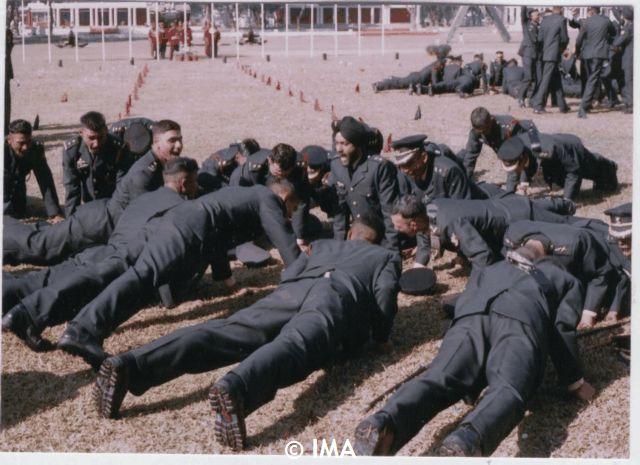
During the POP, a civilian dignitary may also make a speech, as was the case during the passing out parade in 1962 when the President Dr. Sarvepalli. Radhakrishnan addressed the cadets, and in 2007 when the Prime Minister Manmohan Singh did so. In 1982, during the golden jubilee, Prime Minister Indira Gandhi inspected the POP while in 1992, the President R. Venkataraman reviewed the diamond jubilee POP (winter term). In 2006, President APJ Abdul Kalam was the reviewing officer at the POP.Newly commissioned officers after the passing out parade in 2006 doing celebratory pushups.
The finale is the antim pag (final step), where cadets take the last step into Chetwode Hall. However the POP on 11 June 1961 was called off without the final step due to weather, the only instance where this has happened for a passing out batch. The tradition of cap-flinging during the passing out parade has a long past but it was replaced by the cadets doing celebratory pushups. The passing out also consists of traditions such as presentation of a “Sword of Honour” to the best GC. Notable recipients of the Sword of Honour include the current Chief of Defence Staff Bipin Rawat (in 1978) and the Olympian and union minister Col. Rajyavardhan Singh Rathore (in 1990)

Notable alumni
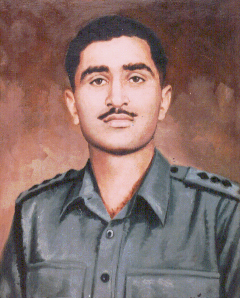
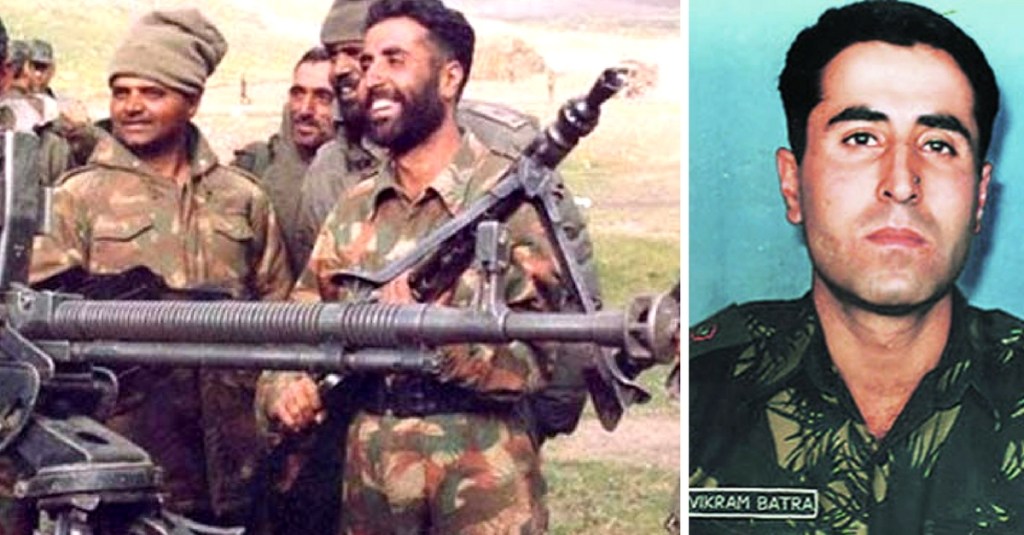
Over 61,000 GCs have graduated from IMA. IMA alumni have led and fought in every conflict in which the Indian Army has served. Numerous alumni have earned laurels, died in action and been honoured with gallantry awards. As of 2016, alumni from the Academy were recipients of 7 Param Vir Chakras, 17 Ashoka Chakras, 84 Maha Vir Chakras and 257 Vir Chakras. Alumni were also recipients of 2 Sarvattam Yudh Seva Medals, 28 Uttam Yudh Seva Medals, 48 Kirti Chakras and 191 Shaurya Chakras. Battle casualties from the Academy total 817 alumni.
 Site Title